
 Equipment downtime is one of the most expensive problems manufacturers face. Every hour a production line sits idle affects far more than immediate output. Missed delivery dates, overtime labor, production rescheduling, expedited shipping, and dissatisfied customers all contribute to costs that can quickly escalate into thousands, or even tens of thousands, of dollars per hour depending on the operation.
While manufacturers invest heavily in preventive maintenance, many production delays occur for a much simpler reason: a replacement part isn’t available when it’s needed.
Traditional spare parts strategies often require businesses to choose between carrying expensive inventory that may never be used or risking extended lead times when a component unexpectedly fails. Today, additive manufacturing offers a smarter alternative by allowing manufacturers to produce many replacement components on demand rather than storing them indefinitely.
The Hidden Cost of Waiting for Parts
When equipment fails, every minute matters.
The cost of downtime extends well beyond repairing the machine itself. Manufacturers frequently experience:
- Lost production capacity
- Missed customer deadlines
- Increased labor costs
- Expedited freight charges
- Schedule disruptions across multiple departments
- Reduced overall equipment effectiveness (OEE)
In many cases, the failed component isn’t particularly complex. A broken bracket, protective guard, sensor mount, fixture, or machine cover can halt an entire production process simply because the replacement isn’t readily available. Even when OEM parts are available, procurement delays, shipping times, or discontinued inventory can extend downtime unnecessarily.
Moving Beyond Physical Spare Parts
For decades, companies have addressed this challenge by maintaining shelves full of replacement components. While this approach provides some insurance against downtime, it creates several new problems:
- Capital tied up in slow-moving inventory
- Valuable warehouse space consumed by rarely used parts
- Components becoming obsolete before they’re ever installed
- Difficulty forecasting which parts will actually be needed
Many facilities discover that a large percentage of their spare parts inventory remains untouched for years. Instead of storing physical inventory, manufacturers are increasingly adopting digital inventory strategies.
What Is Digital Inventory
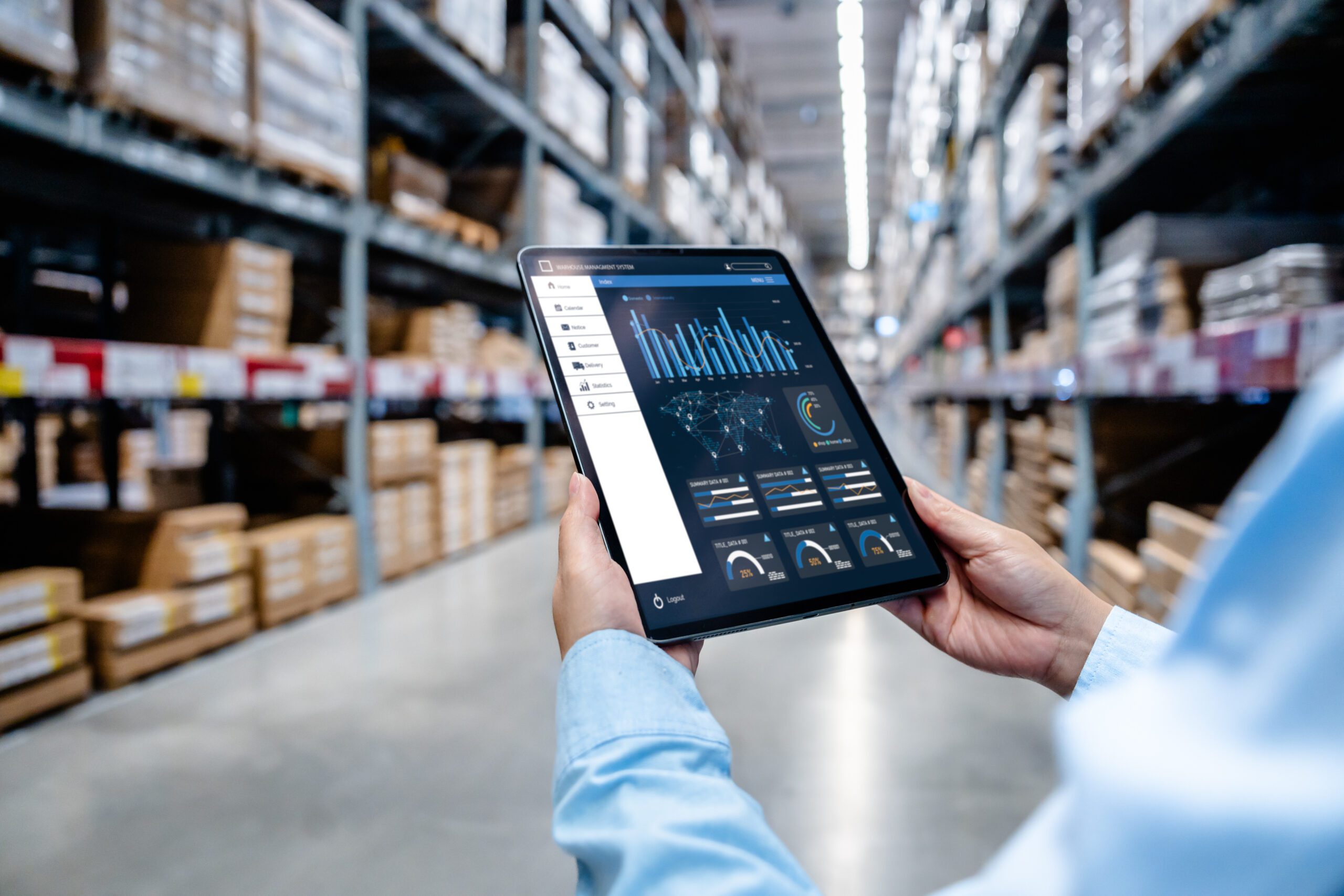 A digital inventory replaces shelves of physical spare parts with secure digital design files. Rather than stocking dozens or hundreds of low-volume components, manufacturers maintain validated CAD files that can be produced whenever the need arises.
When a replacement part is required, the digital file is retrieved, reviewed for the application, and manufactured using the appropriate additive manufacturing process and material. The result is a more flexible inventory strategy that reduces storage costs while improving responsiveness for many low-volume components. Digital inventories enable organizations to produce qualified parts on demand instead of relying exclusively on physical stock.
Practical Applications Across Manufacturing
Not every replacement component is an ideal candidate for additive manufacturing. However, many production-support components are excellent candidates because they combine relatively low production volumes with high operational importance.
Common examples include:
- Brackets and Mounting Hardware: Machine brackets frequently support sensors, cameras, control panels, and auxiliary equipment. When one fails, production may stop until a replacement arrives. Additive manufacturing can often produce these parts quickly without waiting for traditional machining or tooling.
- Safety Guards and Covers: Protective guards help maintain safe operation while protecting sensitive equipment. Because many guards are unique to specific machines or production cells, keeping physical inventory for every variation can be impractical.
- Fixtures and Assembly Tools: Production fixtures are constantly subjected to wear and abuse. On-demand additive manufacturing allows damaged fixtures to be replaced quickly while also providing opportunities to improve ergonomics, reduce weight, or consolidate multiple components into a single printed part.
- Obsolete Components: Older equipment often presents the greatest sourcing challenge. OEM suppliers may no longer support discontinued machines, making replacement components difficult, or impossible, to obtain.
With a qualified digital model, additive manufacturing can help extend the useful life of legacy equipment by producing replacement parts when traditional supply chains cannot.
Reducing Supply Chain Risk
Recent supply chain disruptions have highlighted how dependent manufacturers are on long lead times and global sourcing. Waiting weeks for a replacement component is increasingly difficult when production schedules remain tight. On-demand additive manufacturing provides greater flexibility by shortening the path from digital design to finished component.
Instead of waiting for tooling, minimum order quantities, or overseas shipments, manufacturers can often produce needed parts in days rather than weeks for appropriate applications. This doesn’t replace every conventional manufacturing process, but it does create another valuable option for keeping operations running.
Choosing the Right Parts
Successful additive manufacturing begins with selecting the right applications. Ideal candidates often include components that are:
- Produced in low quantities
- Expensive to inventory
- Frequently customized
- Difficult to score
- No longer supported by the original manufacturer
- Needed quickly when failures occur
Each application should be evaluated for material requirements, mechanical loads, dimensional accuracy, environmental exposure, and long-term performance. This engineering-first approach helps ensure that additive manufacturing delivers reliable results rather than simply producing a printed version of an existing part.
Building a More Resilient Operation
Manufacturers are increasingly viewing additive manufacturing as more than a prototyping technology. It has become an important tool for improving operational resilience. By combining digital inventory with industrial-grade additive manufacturing, companies can reduce dependence on physical stock, improve responsiveness to unexpected failures, and keep production moving with greater confidence.
At 3D Parts Unlimited, every project begins with understanding the application’s functional requirements. Whether the need involves a replacement bracket, production fixture, robotic gripper, obsolete machine component, or another low-volume industrial part, our engineering team helps determine the most appropriate additive manufacturing process, material, and production strategy. Downtime may never disappear completely, but the time spent waiting for replacement parts doesn’t have to be part of the equation.
If your facility maintains shelves full of slow-moving spare parts or struggles to source obsolete components, it may be time to evaluate whether additive manufacturing can become part of your maintenance and inventory strategy. The right digital inventory doesn’t just reduce storage. It helps keep production moving when every hour counts.