
How Additive Manufacturing Improves Form, Fit, and Function
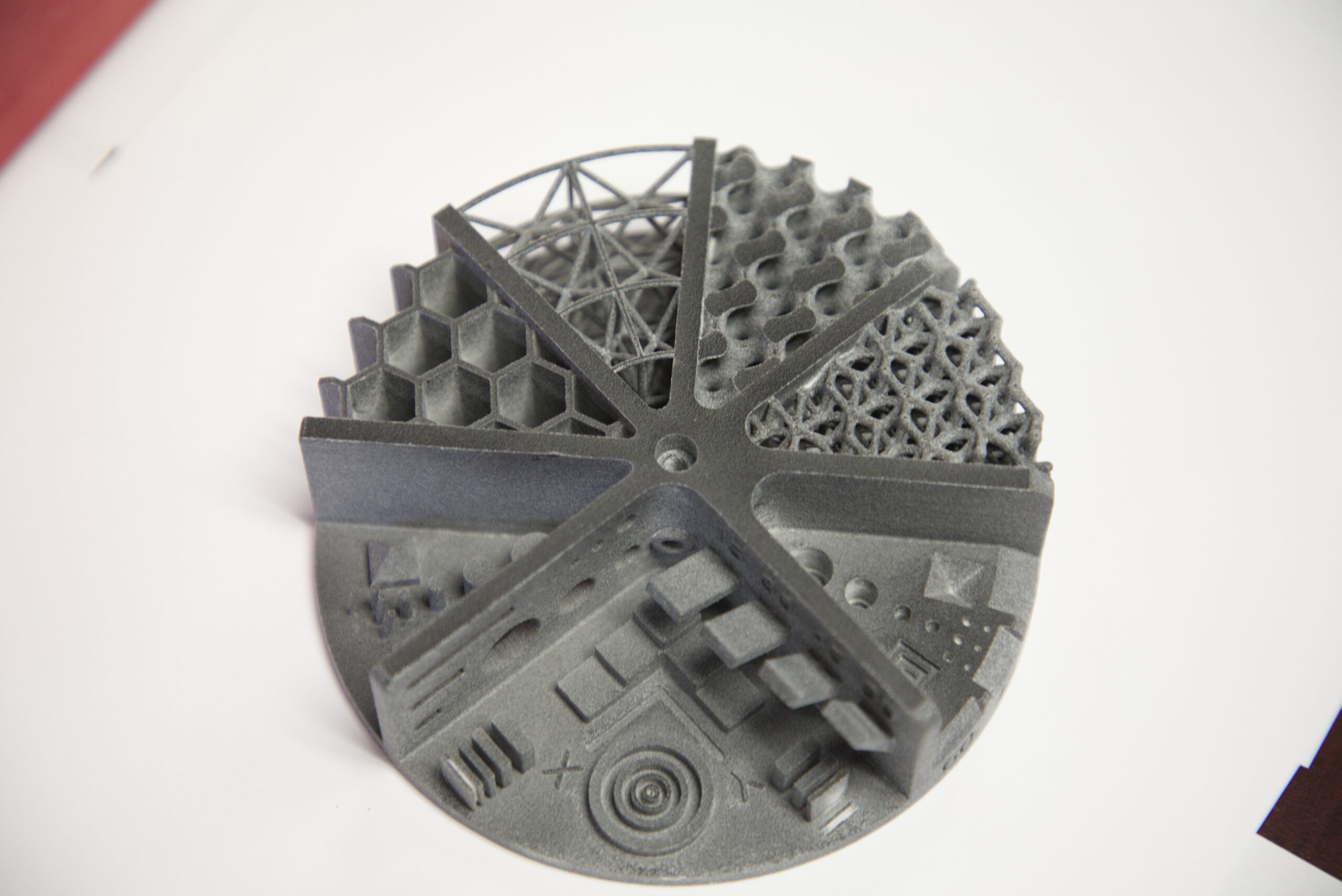 Traditional manufacturing methods often require engineers to design parts around production constraints. Machining requires tool access, casting requires molds, and forming processes impose geometric limitations. Additive Manufacturing removes many of these constraints.
Because parts are built layer by layer, engineers gain unprecedented freedom to design components optimized for performance rather than manufacturing limitations. This freedom allows improvements in three critical areas: form, fit, and function.
Form refers to the geometry of the part. Additive Manufacturing allows the creation of complex shapes that would be extremely difficult to produce using traditional processes. Internal channels, lattice structures, and organic geometries can be integrated directly into the design. These features can reduce weight while maintaining structural integrity.
Fit describes how a part integrates into an assembly. Additive Manufacturing enables engineers to consolidate multiple components into a single part. This reduces assembly complexity and eliminates fasteners or connectors that may introduce potential failure points. Part consolidation also simplifies maintenance and reduces inventory requirements.
Function represents the performance of the component. Additive Manufacturing allows engineers to optimize airflow, fluid flow, thermal performance, and structural strength. Cooling channels can be positioned exactly where heat is generated. Reinforcements can be placed precisely where loads occur. These design improvements often lead to components that outperform traditionally manufactured alternatives.
Another major advantage is rapid iteration. Because Additive Manufacturing allows parts to be produced quickly, engineers can test multiple design variations and refine their designs based on real-world data. This iterative process accelerates innovation and improves final product performance. However, realizing these benefits requires expertise. Not every design automatically benefits from Additive Manufacturing. Parts must be carefully evaluated to determine where AM provides measurable improvements.
At 3D Parts Unlimited, engineers collaborate with customers to identify opportunities where Additive Manufacturing enhances form, fit, and function. The result is not simply a printed part—it is an optimized industrial component built with integrity, strength, and speed.