
Every manufacturer eventually faces the same frustrating reality: a critical component fails, production slows or stops, and the replacement part is no longer available. The OEM has discontinued it, the tooling has been scrapped, or the original design files simply no longer exist. What should be a straightforward repair suddenly becomes a costly search for used inventory, a complete equipment replacement, or an extended period of downtime.
Fortunately, obsolete parts don’t always mean obsolete equipment.
Advancements in reverse engineering and additive manufacturing have given manufacturers a practical alternative. Rather than replacing an entire machine because of one unavailable component, companies can recreate the part while maintaining its required form, fit, and function. When approached correctly, reverse engineering allows organizations to extend the life of valuable equipment, reduce downtime, and avoid unnecessary capital expenditures.
Why OEM Parts Become Obsolete
There are countless reasons replacement parts disappear from the market.
Sometimes an OEM discontinues an older product line. In other cases, a supplier is acquired, manufacturing is moved overseas, or tooling reaches the end of its service life. Engineering documentation may have been lost over decades of ownership changes, or replacement inventory may simply no longer justify continued production.
Unfortunately, industrial equipment often outlives the availability of its replacement parts. Many machines continue delivering value for decades, making complete replacement difficult to justify when only one component has failed.
The result is a familiar dilemma for maintenance managers and operations teams: replace an entire system, spend months searching secondary markets, or find another way to manufacture the part.
Reverse Engineering Creates a New Path Forward
Reverse engineering bridges the gap between an unavailable component and a manufacturable replacement.
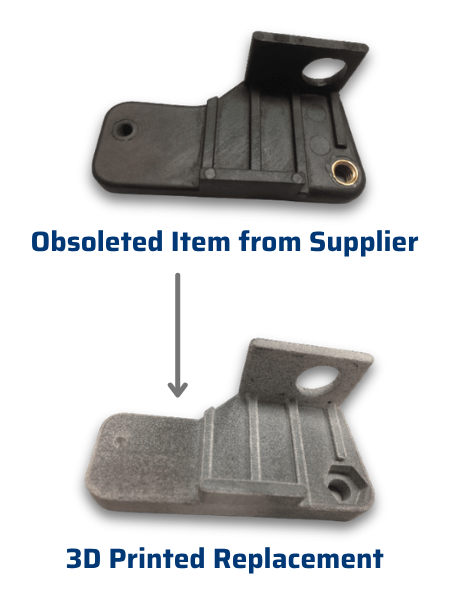 Rather than relying on original CAD models or engineering drawings, the process begins with the physical part itself. Even worn, damaged, or incomplete components can often provide enough information to recreate the original design intent through careful measurement, inspection, and digital modeling.
The objective isn’t simply to duplicate every scratch or sign of wear. Instead, engineers work to understand how the part originally functioned within the assembly, restoring critical features while eliminating the dimensional changes caused by years of service.
The result is a clean, production-ready digital model that accurately represents the component as it was intended to perform.
Preserving Form, Fit, and Function
One of the most important principles of replacement part design is maintaining form, fit, and function.
- Form ensures the component maintains the correct geometry and physical characteristics.
- Fit guarantees it interfaces properly with surrounding assemblies.
- Function confirms it performs the same operational role under expected loads and conditions.
Maintaining these three characteristics allows manufacturers to replace individual components without redesigning entire systems or introducing compatibility issues.
In many situations, engineers can even improve upon the original design by addressing known failure points, selecting more suitable materials, or incorporating manufacturing methods unavailable when the component was originally produced. The goal isn’t to change how the equipment operates—it’s to restore reliable performance while taking advantage of modern manufacturing capabilities.
The Reverse Engineering Process
Every obsolete part presents its own challenges, but successful projects generally follow a structured workflow.
- Initial Assessment –Engineers evaluate the existing component, identify critical features, determine material requirements, and assess whether reverse engineering is the right solution.
- Digital Capture and Modeling –Using precision measurement techniques, 3D scanning, or both, the component is converted into digital geometry and rebuilt as a production-ready CAD model.
- Engineering Validation –The design is reviewed for dimensional accuracy, assembly compatibility, material selection, and performance requirements.
- Production –Once validated, the part moves into production using the manufacturing process best suited for the application. For many low-volume or complex components, additive manufacturing offers significant advantages by eliminating tooling costs and reducing lead times.
Why Additive Manufacturing Makes Sense
Traditional manufacturing often depends on molds, dies, fixtures, or tooling that no longer exist. Recreating those assets for a handful of replacement parts can quickly become prohibitively expensive.
By building components directly from digital models, additive manufacturing enables manufacturers to economically produce one replacement part or a small production run without investing in expensive tooling. This flexibility is especially valuable when supporting legacy equipment, custom machinery, or specialized industrial applications where production quantities remain low.
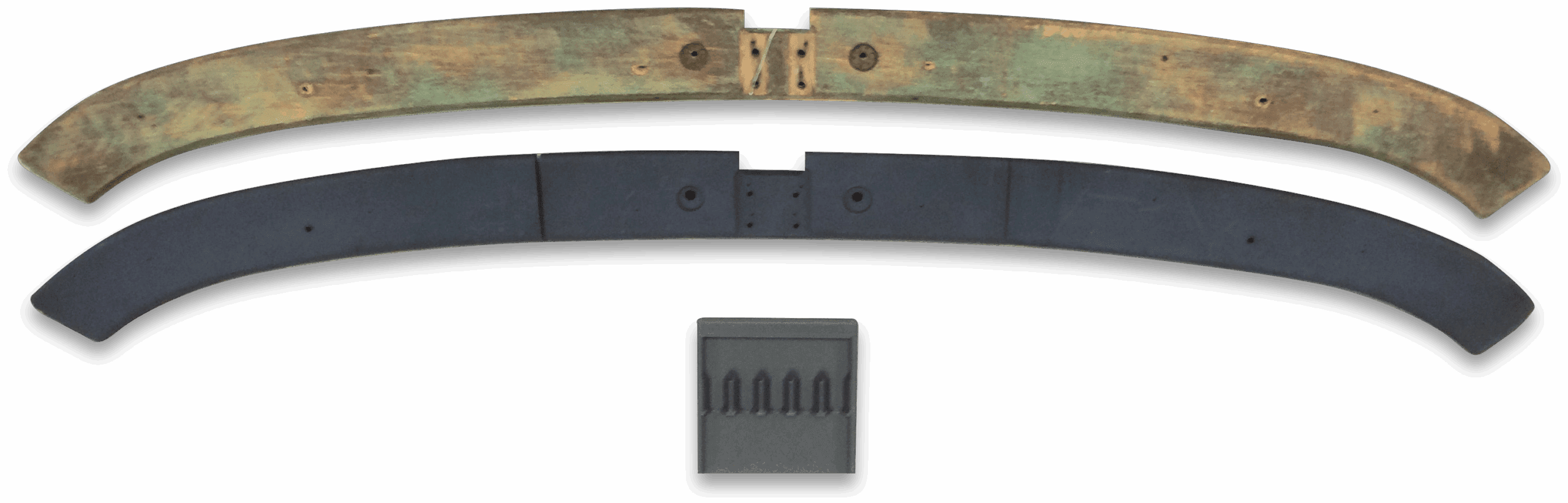
Just as importantly, additive manufacturing dramatically shortens the timeline from design approval to finished part, helping organizations return equipment to service faster while minimizing costly downtime.
Extending the Life of Critical Equipment
Obsolete OEM parts don’t have to force equipment into retirement.
With today’s reverse engineering capabilities and advanced additive manufacturing technologies, manufacturers have practical options for recreating replacement components even when original documentation has disappeared. By carefully assessing each application, rebuilding accurate digital models, validating performance requirements, and selecting the appropriate manufacturing process, companies can continue operating legacy equipment with confidence.
At 3D Parts Unlimited, we help manufacturers solve exactly these types of challenges. Whether you’re replacing a discontinued component, recreating a legacy part from a physical sample, or looking for a faster alternative to traditional manufacturing, our team combines engineering expertise with advanced additive manufacturing technologies to deliver production-ready solutions that keep your operations moving.
When replacement parts disappear, your production doesn’t have to.